ULTRAKILL
New Blood Interactive (2020)
Description
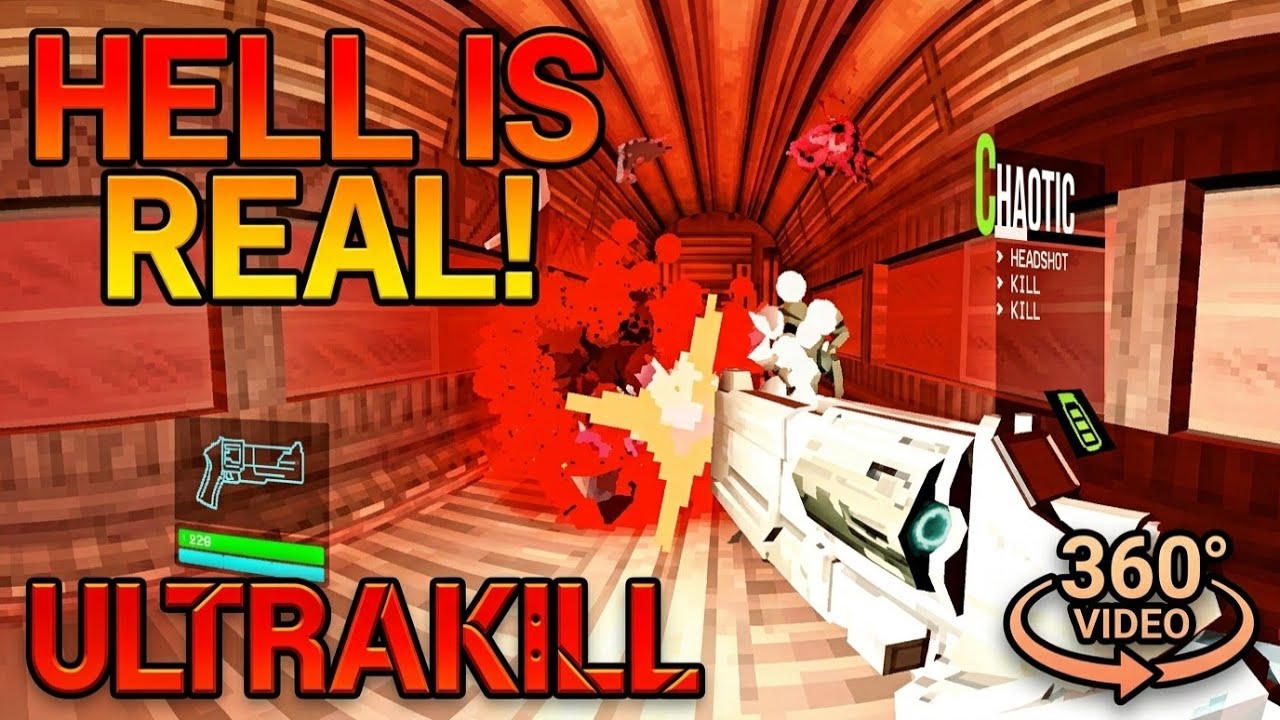
Since its release in 2020, ULTRAKILL has established itself as one of the most kinetic and innovative first-person shooters in the modern gaming landscape. Developed by Arsi "Hakita" Patala and published by New Blood Interactive, the game seamlessly blends the speed and ferocity of classic retro shooters like Quake with the hyper-aggressive modern mechanics of Doom and the complex, combo-driven style meters of character action games such as Devil May Cry. Far from relying solely on the nostalgia of its low-poly, PlayStation 1-era aesthetic, the title pushes the boundaries of the genre through an intoxicating mix of deep lore, meticulously crafted levels, and a uniquely punishing yet rewarding combat loop.
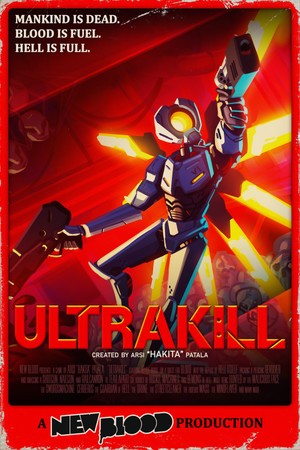
The premise of the game is immediately established through its iconic, bleak opening mantra: Mankind is dead, blood is fuel, and Hell is full. Players take on the role of V1, a highly advanced combat machine navigating the aftermath of humanity's total extinction. Following an apocalyptic final war, the machines that humans built have run out of resources on the surface and now descend into the depths of Hell in search of fresh blood to sustain themselves. Interestingly, the game provides a canonical justification for its retro graphical style: V1 and other machines perceive the world in simplified textures and low resolutions to maximize processing speed and combat visibility. This descent into the underworld takes V1 through a shifting, nightmarish landscape heavily inspired by Dante's Inferno, where it encounters demonic entities, restless human souls, and angelic enforcers.
What truly separates the experience from its peers is its approach to player health and combat synergy. There are no health packs scattered across the arenas, nor does health regenerate while hiding behind cover. Instead, V1 features thin plating that absorbs fresh blood on contact, meaning the only way to heal is by fighting at extreme close range and showering in the blood of enemies. This brilliant mechanic forces players into constant, aggressive forward momentum, punishing retreat and rewarding calculated risk. Complementing this is an extensive arsenal of highly synergistic weapons, including revolvers, shotguns, nailguns, railcannons, and rocket launchers. The game encourages immense creativity through its Style Meter; players can parry enemy attacks, toss coins into the air to ricochet high-powered lasers directly into enemy weak points, and juggle adversaries to maintain the highest ranks.
The campaign is structured chronologically through a Prelude and three distinct acts: Act 1: Infinite Hyperdeath, Act 2: Imperfect Hatred, and Act 3: Godfist Suicide. These acts take the player through various layers of Hell, including Limbo, Lust, Gluttony, Greed, Wrath, Heresy, Violence, and Fraud. Rather than being visually uniform, each layer subverts expectations. For instance, Lust takes the form of a neon-lit cyberpunk cityscape originally reformed by King Minos, who utilized powerful winds to shield the damned from eternal punishment. Beyond the intense combat arenas, the game frequently breaks its own genre conventions through hidden secret levels that dramatically shift the gameplay style, suddenly turning the ultra-violent shooter into a visual novel, a puzzle game, or even a fishing simulator.
Narratively, the game boasts a surprisingly deep and tragic lore, much of which is uncovered through hidden testament logs and entries provided by the Terminals, which are sentient interconnected networks that broadcast V1's stylish massacres for their own entertainment. The central cast of characters is small but profoundly impactful. V1 frequently clashes with V2, an earlier prototype sporting heavier armor but lacking V1's blood-absorption plating, resulting in intense, mirrored boss fights where the player claims the machine's robotic arms. The narrative's primary antagonist and emotional core is Gabriel, the Judge of Hell, voiced iconically by Gianni Matragrano. Initially a zealous, dogmatic Supreme Angel who scoffs at V1 as a mere object, Gabriel's repeated defeats at the hands of the machine shatter his worldview. Stripped of his divine light by the Heavenly Council for his failures, Gabriel transitions into the Apostate of Hate, returning to Heaven to slaughter the corrupt Council in a bloody realization of their hypocrisy. Additionally, the game features monumentally difficult secret bosses known as Prime Souls, such as King Minos and Sisyphus, who attempted to rebuild their respective layers of Hell before being violently struck down by Heaven and imprisoned within flesh constructs.
Over the years, the development of the game has expanded significantly. What began largely as a solo project by Hakita has evolved under New Blood Interactive into a collaborative effort involving a dedicated team of programmers, 3D artists like Andrei Mishchenko and Victoria Holland, and an eclectic roster of musicians including Keygen Church, Meganeko, and Health. Constant updates have cemented its ambition, bringing sweeping visual upgrades that have retroactively enhanced older levels to match the polished geometry of the newer acts, as well as complex mechanics like the non-Euclidean portals introduced in the Fraud layer. The sheer volume of mechanical depth, atmospheric storytelling, and community engagement makes the game an enduring triumph. By treating movement and violence as a high-speed puzzle, the game goes beyond its boomer-shooter roots, standing as an intricate, masterfully designed symphony of destruction.
Release Date: 2020
Genres: Action, Indie, Early Access, First-person shooter
Developers: Arsi "Hakita" Patala
Publishers: New Blood Interactive
Price:
Steam: $29.99