Contra
KONAMI (1987)
Description
Contra is a seminal run-and-gun action video game developed and published by Konami. Debuting in arcades on February 20, 1987, the game rapidly became a cornerstone of the action genre, praised for its tight controls, relentless difficulty, and defining two-player cooperative gameplay. While initially a hit in the coin-operated arcade market, Contra achieved legendary status through its widespread home console ports, most notably the Nintendo Entertainment System (NES) release in 1988. By effectively blending the aesthetics of 1980s action cinema with flawless side-scrolling mechanics, Contra left an indelible mark on the video game industry.
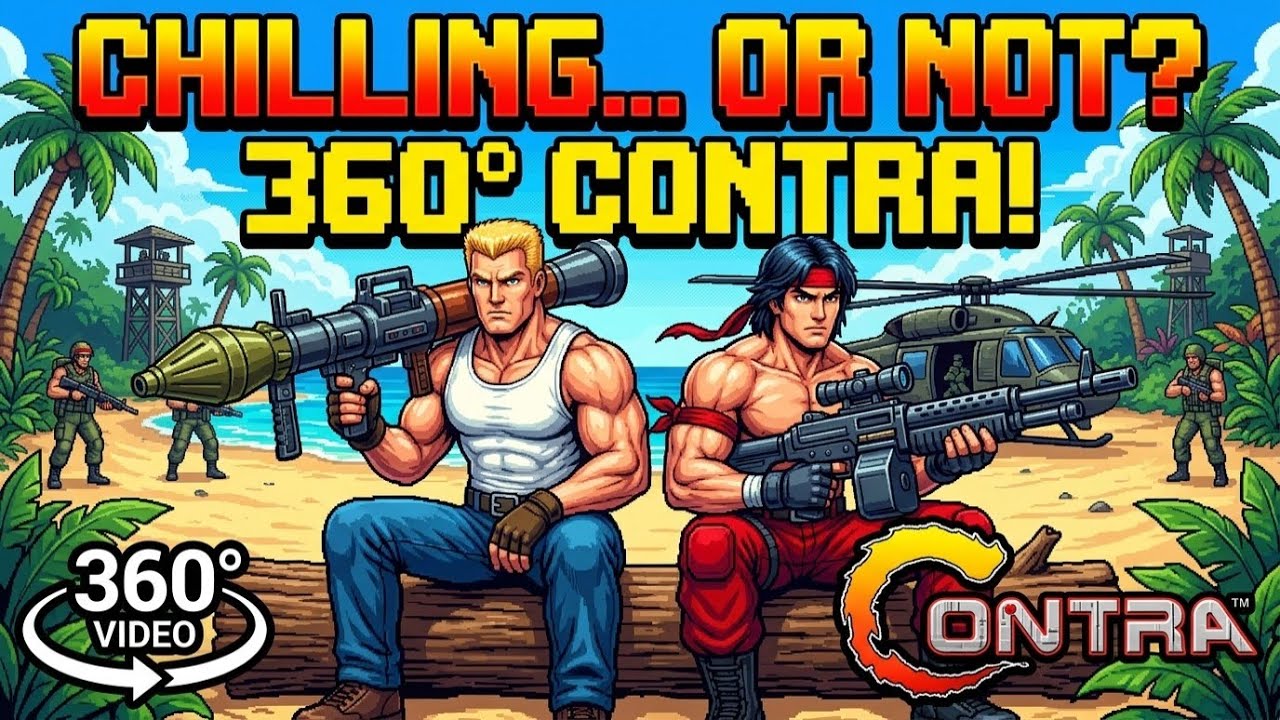
The conceptual framework of Contra is heavily steeped in the pop culture and political climate of the 1980s. The game's muscular, heavily armed protagonists, Bill Rizer and Lance Bean, are clear homages to iconic action stars of the era, drawing inspiration from blockbuster films like Rambo, Commando, and Predator. The game's title itself reflects the political atmosphere of the time; released shortly after the Iran-Contra affair became public knowledge, the game shares its name with the Nicaraguan Contra rebels, a connection further supported by the game's ending theme song, which is titled "Sandinista"—the real-life adversaries of the Contras. However, this naming led to localization changes. In Europe and Oceania, the arcade and early home computer ports were released under the title Gryzor. When the game was later brought to the NES in PAL regions, it faced strict censorship laws from Germany's BPjM, which prohibited the sale of violent games depicting human-on-human combat to minors. To circumvent this, Konami retitled the European NES version to Probotector and replaced the human protagonists and enemies with robotic counterparts.
Set in the futuristic year of 2633 A.D., the plot of Contra is straightforward: Bill and Lance, two elite Marine Commandos, are dispatched to neutralize the Red Falcon organization, an alien terrorist force plotting world domination. Despite the simple narrative, the gameplay is extraordinarily engaging. The game requires players to navigate through various hostile environments using eight-way directional shooting, jumping, and crouching maneuvers. Survival depends on quick reflexes, as the game notoriously features one-hit deaths. To aid in their mission, players can shoot flying capsules to obtain weapon upgrades. These iconic power-ups—denoted by a falcon icon with a corresponding letter—include the Machine Gun, Laser, Fireball, and the universally favored Spread Gun, which dramatically increases the player's offensive capabilities.
While the arcade version was a commercial success, becoming one of the top four highest-grossing dedicated arcade games in the United States in 1987, it is the NES adaptation that is widely considered the definitive version. The original arcade hardware featured a custom Konami board powered by a Hitachi 6309 CPU and a YM2151 sound chip. It utilized a vertically oriented monitor (portrait mode) to accommodate its action, which some critics argue made the playfield feel cramped and claustrophobic. The arcade game featured five continuous stages, with the final stage segmented into four distinct areas.
When porting the game to the NES, Konami made substantial structural and graphical changes to suit the hardware and the horizontal 4:3 display format. The NES version recomposed the arcade's layout into eight distinct stages. For example, it combined the arcade's second and third stages into one, shifted the waterfall level, and split the massive final arcade stage into four separate levels: the Snowfield, Energy Zone, Hangar, and Alien Lair. Additionally, the NES version greatly improved the pacing, offered smoother controls, and featured more elaborate and memorable boss designs, such as the gigantic alien creature in the final stages, which replaced simpler defensive turrets from the arcade. Interestingly, the Japanese Famicom version possessed further enhancements over its North American NES counterpart. Because it utilized Konami's custom VRC2 Memory Management Controller chip rather than the cheaper UNROM board used in the West, the Famicom release featured animated backgrounds (like swaying trees), interstitial story cutscenes, and an overworld map displayed between levels. Other ports included the MSX2 computer version, which drastically altered the formula by replacing scrolling screens with flip-screens and substituting the one-hit kill system with a health energy gauge.
One of the most enduring cultural artifacts to emerge from Contra is the popularization of the "Konami Code". Because the game was notoriously unforgiving, players who entered the sequence Up, Up, Down, Down, Left, Right, Left, Right, B, A at the title screen were granted 30 extra lives instead of the standard three. This secret cheat code became a playground legend and a crucial tool for an entire generation of gamers attempting to beat the game, cementing the code's place in gaming history and ensuring its inclusion in dozens of subsequent video games and pop culture media.
The legacy of Contra cannot be overstated. The NES version was a critical triumph, winning Electronic Gaming Monthly's award for Best Action Game of 1988. Its success proved that arcade experiences could not only be successfully translated to home consoles but could actually be improved upon. The game laid the foundation for an extensive franchise, spawning beloved sequels like Super C and Contra III: The Alien Wars, which continued to refine the run-and-gun formula. Today, the original 1987 release remains a towering achievement in retro gaming, fondly remembered for its intense cooperative action, unforgettable soundtrack, and its role in defining the golden age of side-scrolling shooters.