Five Nights At Freddy's
Mega Cat Studios, Clickteam, Scott Cawthon, ScottGames, Illumix (2014)
Description
Five Nights at Freddy’s is a defining pillar of modern indie horror, a franchise that began as a solitary endeavor and blossomed into a multimedia empire. Released in 2014, the original video game redefined the survival horror genre by replacing traditional run-and-hide mechanics with an agonizing sense of claustrophobia and resource management. Initially created by lone developer Scott Cawthon, the video game series eventually expanded its scope through collaborations with various creative teams. Today, its extensive lineage involves co-developers like Steel Wool Studios, while the intricate web of publishing and further development is supported by Mega Cat Studios, Clickteam, Scott Cawthon, his own label ScottGames, and Illumix.
The origin of Five Nights at Freddy’s is one of the most famous anecdotes in indie game development. Prior to creating the game, Cawthon had primarily developed family-friendly and Christian-oriented titles. One of his projects, a resource management game titled Chipper & Sons Lumber Co., received severe criticism from players and reviewers who noted that the characters inadvertently resembled terrifying, soulless animatronics. Initially discouraged by the negative reception, Cawthon decided to lean into the criticism, leveraging his uncanny character designs to create an intentionally frightening experience. Developed in just six months using the Clickteam Fusion 2.5 game engine and Autodesk 3ds Max for 3D modeling, the game launched in August 2014 and immediately caught the attention of players worldwide.
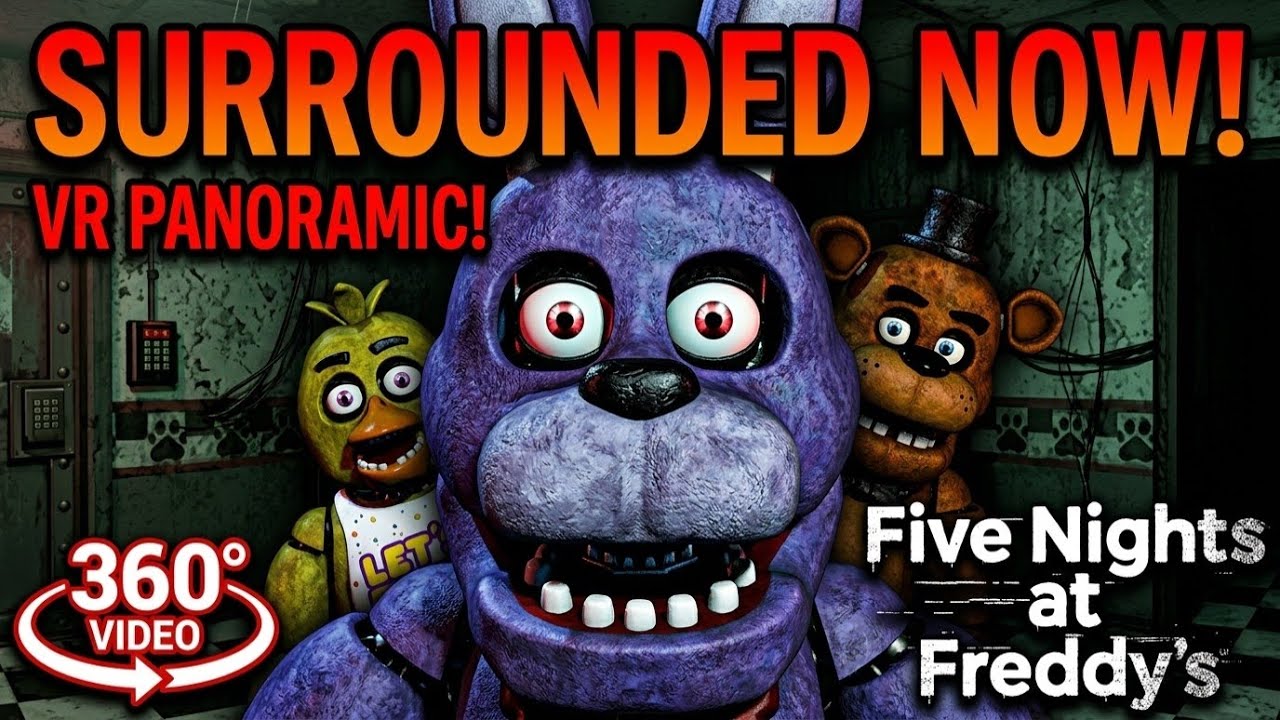
At its core, the 2014 release is a masterclass in tension and minimalism. The player assumes the role of a night security guard working the midnight to six a.m. shift at Freddy Fazbear’s Pizza, a fictional children’s restaurant reminiscent of Chuck E. Cheese. The establishment’s animatronic mascots—Freddy Fazbear, Bonnie, Chica, and Foxy—are left to wander the building at night and will forcefully stuff any human they encounter into a mechanical suit, resulting in a gruesome death. Bound to a single office chair, the player cannot fight or flee. Instead, they must monitor a network of grainy security cameras to track the erratic movements of the mascots. Survival depends entirely on managing a strictly limited power supply, which is depleted by checking the cameras, turning on the hallway lights, and closing the heavy security doors. If the power runs out, the player is plunged into darkness and left defenseless against the inevitable jump scares.
Beneath the deceptively simple gameplay lies a profoundly complex and cryptic narrative that cemented the game’s longevity. What initially appears to be a straightforward horror premise unfolds into a grim lore involving a serial killer, haunted animatronics possessed by the spirits of missing children, and a legacy of corporate negligence. Cawthon masterfully delivered this story not through traditional cutscenes, but through easily missed Easter eggs, background details, obscure minigames, and subtle environmental storytelling. This approach galvanized a massive, highly dedicated community of fans and internet sleuths who meticulously dissected the game’s source code, audio files, and spin-off literature—such as the Survival Logbook—to piece together the overarching timeline.
As the popularity of Five Nights at Freddy’s skyrocketed, propelled heavily by viral Let's Play videos on YouTube, the series rapidly expanded beyond the capabilities of a single developer. The original era of point-and-click survival, published under Cawthon and his banner ScottGames, eventually paved the way for broader horizons. Clickteam, the creators of the original game engine, stepped in to help publish and port the series to modern home consoles and mobile platforms. Seeking to push the franchise into fully realized 3D environments, Cawthon partnered with Steel Wool Studios, which developed the terrifying virtual reality anthology Help Wanted and the ambitious, free-roaming title Security Breach. The universe continued to branch out as Illumix developed and published an augmented reality mobile game, Special Delivery, bringing the horrific animatronics into players' real-world living rooms. Furthermore, Mega Cat Studios took the franchise in a distinctly retro direction, acting as a publisher and developer for pixel-art adaptations of the deeper literary lore, such as Into the Pit.
The cultural impact of Five Nights at Freddy’s cannot be overstated. It holds a Guinness World Record for the most video game sequels released in a single year, reflecting the blistering pace at which the early series capitalized on its viral fame. Beyond the video game industry, the property has spawned a highly successful line of merchandise, a series of bestselling novels and graphic novels, and a blockbuster feature film. By continuously evolving its mechanics and expanding its collaborative network of developers and publishers, Five Nights at Freddy’s transformed a simple critique of an indie game into an enduring staple of horror fiction, forever changing how video game narratives are structured and shared in the digital age.
Release Date: 2014
Genres: Simulation, Puzzle, Point-and-click, Indie, Survival horror
Developers: Scott Cawthon, Steel Wool Studios
Publishers: Mega Cat Studios, Clickteam, Scott Cawthon, ScottGames, Illumix
Price:
Steam: $4.99