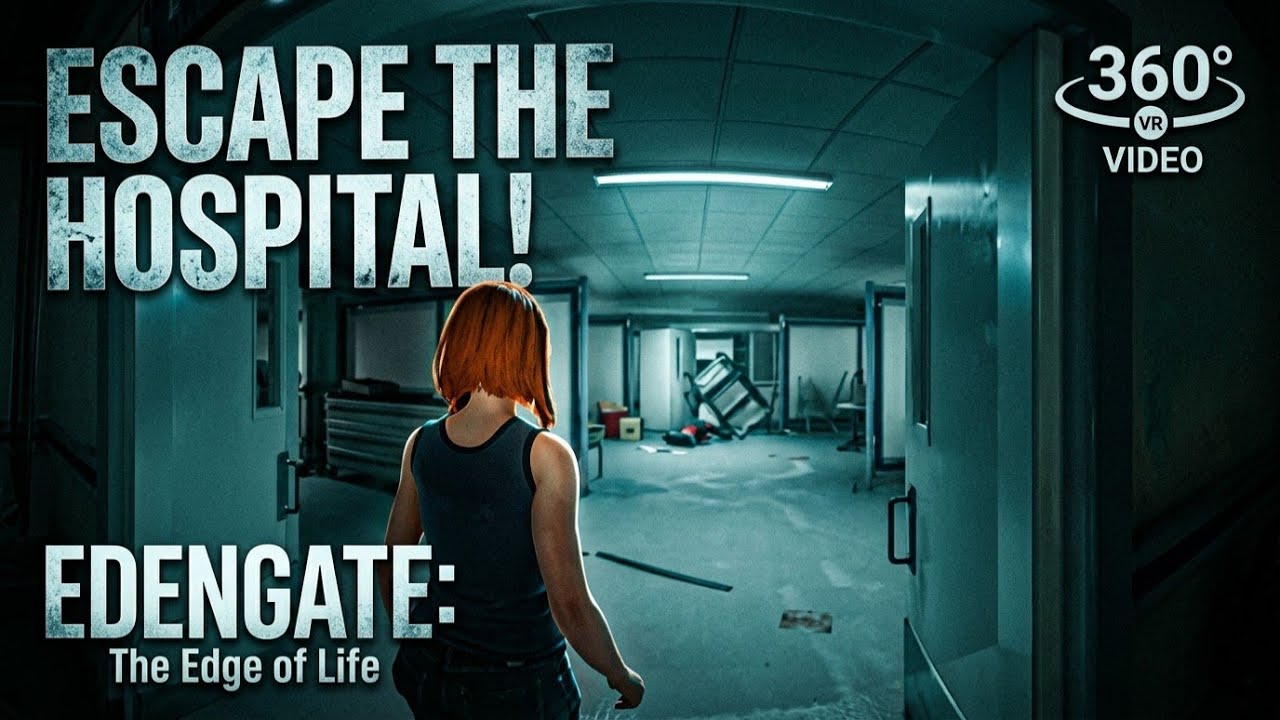
360° EDENGATE: The Edge of Life
Playlist by TheGamerBay
Description
EDENGATE: The Edge of Life is a narrative-driven adventure game that delves deeply into themes of isolation, memory, and the resilience of the human spirit. Conceived and developed during the height of the global COVID-19 pandemic, the game acts as a dark, interactive reflection of the loneliness, uncertainty, and sudden stillness that characterized that era. By placing the player in an eerily abandoned world, it invites a quiet, introspective journey. Complementing this melancholic experience is the game's exploration of immersive media, specifically through a 360-degree video experience designed to draw audiences deeper into its desolate universe.
At its core, the game follows the story of Mia, a young and brilliant biologist who awakens in an empty, decaying hospital in the fictional city of Edengate. Stripped of her memories and surrounded by absolute silence, Mia must navigate the overgrown, mysteriously abandoned urban landscape to piece together the events that led to the sudden disappearance of humanity. The gameplay aligns closely with the walking simulator genre, focusing primarily on environmental storytelling, exploration, and light puzzle-solving rather than combat or complex mechanics. Players uncover Mia's past and the fate of the city by interacting with abandoned objects, reading left-behind documents, and listening to Mia's inner monologues.
The strength of EDENGATE lies significantly in its atmosphere. The visual direction features beautiful but haunting environments where nature and strange biological anomalies have begun to reclaim the concrete world. This visual storytelling is elevated by a stirring, emotional soundtrack composed by Laryssa Okada, which perfectly captures the dichotomy between despair and hope. The deliberate, unhurried pacing allows players to absorb the quiet tragedy of the setting, making Mia's journey a deeply psychological and emotionally resonant experience.
To bridge the gap between traditional screen-based gaming and deep sensory immersion, the world of EDENGATE was expanded through a specialized 360-degree video experience. Utilized as an immersive prologue and narrative extension, this 360-degree format allows viewers to step directly into the eerie environments of the game without needing to interact with traditional gaming controls. By viewing the content through a virtual reality headset, shifting a smartphone, or dragging the perspective on a web browser, users can look in any direction. They can gaze up at the flickering hospital lights, peer down long, debris-filled corridors, or look over their shoulders at the overgrown city streets.
This 360-degree experience fundamentally alters the way the audience engages with the world of Edengate. In a standard trailer or gameplay video, a director dictates exactly what the audience sees and when they see it. In the 360-degree video, the viewer becomes an active participant in observing the desolation, forced to search the environment themselves. When combined with spatial audio—where the sound of dripping water, distant alarms, or unidentifiable echoes shifts naturally as the viewer turns their head—the experience induces the exact same profound sense of isolation and vulnerability that Mia feels in the game. It serves as a brilliant primer for the game's psychological elements, demonstrating how immersive video can amplify the emotional stakes of video game storytelling.
Ultimately, EDENGATE: The Edge of Life is more than just a mystery about a vanished population; it is an exploration of human emotion in the face of absolute solitude. By utilizing the 360-degree video format alongside the core game, the creators managed to extend the atmospheric weight of Edengate beyond the confines of a traditional monitor. This combination of a deeply personal, narrative-focused video game and an immersive, interactive video experience creates a unique multimedia journey, leaving the audience with lingering thoughts about the fragility of society and the enduring nature of human connection.
Published:
May 10, 2026